
占星-星座系統
H.LAM
9/6/20253 分钟阅读
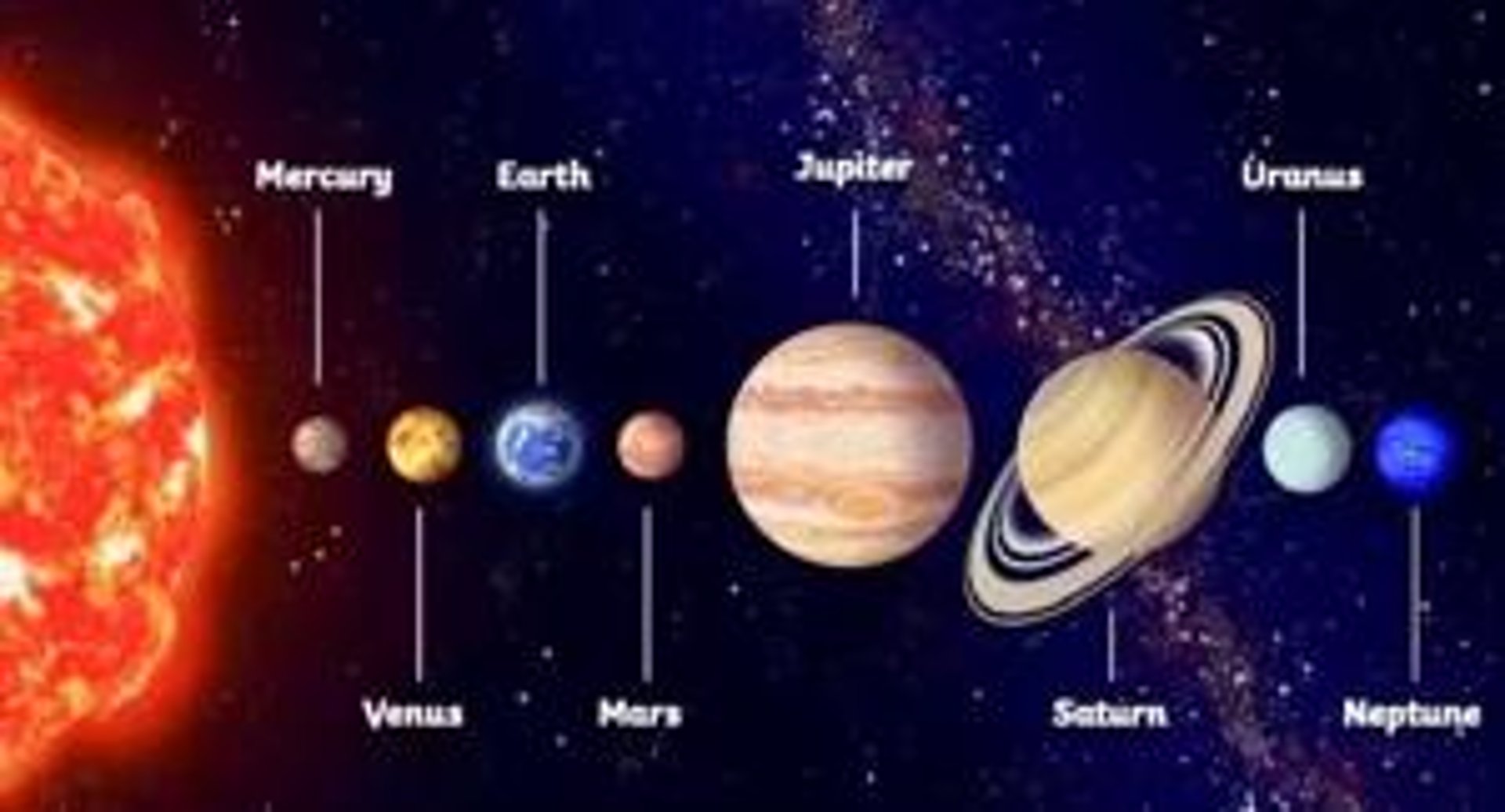
Constellation 星座系統
🌍 Earth’s Orbit and the Sun’s Apparent Position
Although Earth orbits the Sun, from Earth’s perspective, the Sun appears to move through the zodiac. For example:
· When Earth is in Scorpio, the Sun appears in Taurus
· When Earth is in Pisces, the Sun appears in Virgo
This apparent position is what defines your sun sign.
🌟Introduction to the Zodiac System
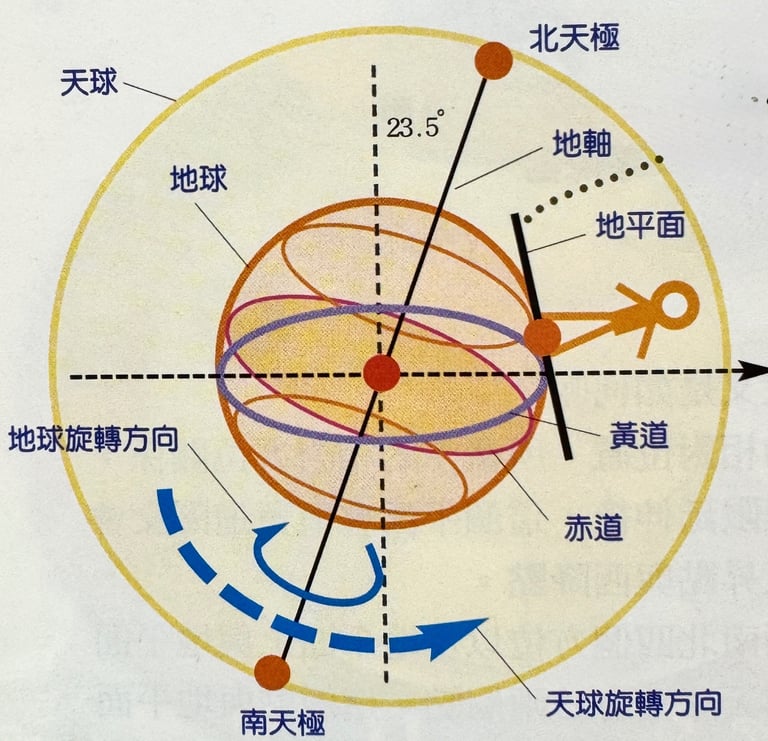
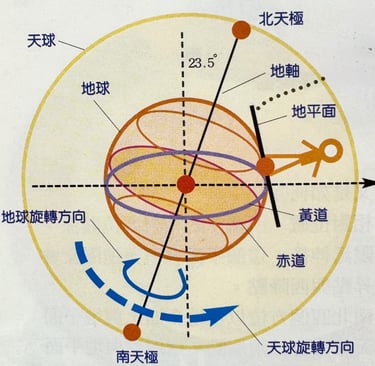
The ecliptic plane and the celestial equator intersect at two points: the spring equinox and the autumn equinox. In astrology, the spring equinox is used as the starting point of the ecliptic, which is divided into 12 equal segments of 30 degrees each. These segments form the 12 zodiac signs: Aries, Taurus, Gemini, Cancer, Leo, Virgo, Libra, Scorpio, Sagittarius, Capricorn, Aquarius, and Pisces.
The spring equinox marks the beginning of Aries, while the autumn equinox begins with Libra, which is Aries’ opposite sign.
🌞 The Sun and Seasonal Changes
· When the Sun enters Aries → Spring begins
· When the Sun enters Cancer → Summer begins
· When the Sun enters Libra → Autumn begins
· When the Sun enters Capricorn → Winter begins
For example, around June 23 each year, the Sun enters Cancer. So someone born on that day would have Cancer as their sun sign. However, the exact transition time between signs varies each year and must be checked using an ephemeris (e.g., Astrodienst ephemeris).
📅 How to Determine Your Sign on a Cusp Day
If, in a particular year, the Sun enters Taurus at 3:26:18 PM on April 20:
· A person born at 3:26:17 PM is Aries
· A person born at 3:26:19 PM is Taurus
So, people born on the cusp of two signs are not both signs—they belong to the one the Sun was in at their exact birth time.
🌟 星座系統簡介
黃道面與赤道面在春分點和秋分點交會。占星學以春分點為黃道的起點,將黃道劃分為12個等分,每個30度,形成12個星座:牡羊、金牛、雙子、巨蟹、獅子、處女、天秤、天蠍、射手、摩羯、水瓶、雙魚。
春分點是牡羊座的開始,秋分點則是牡羊座的對宮——天秤座的起點。
🌞 太陽與季節的關係
· 太陽進入牡羊座 → 春分開始
· 太陽進入巨蟹座 → 夏至開始
· 太陽進入天秤座 → 秋分開始
· 太陽進入摩羯座 → 冬至開始
例如:每年約在6月23日,太陽進入巨蟹座,所以這天出生的人太陽星座是巨蟹座。 但星座交接的時間非常精準,要查星曆表(如 Astrodienst ephemeris)才能確定。
📅 交接日怎麼計算?
如果某年4月20日下午3點26分18秒太陽進入金牛座,那麼:
· 3點26分17秒出生的人是牡羊座
· 3點26分19秒出生的人是金牛座
所以,出生在交接日的人不能同時算兩個星座,要看精確時間。
🌍 地球與太陽的觀察角度
地球繞太陽轉,但從地球看,太陽好像在某個星座。例如:
· 當地球在天蠍座位置時,太陽看起來在金牛座
· 當地球在雙魚座位置時,太陽看起來在處女座
這就是太陽星座的由來。
The Zodiac Belt and Earthly Matters 黃道帶與地上的事物
任何時刻,行星在黃道上的位置在全球都是一樣的,這代表了黃道的符號意義。但同一時間,各地人看到行星在天空的位置卻不同,例如有人在台灣看到太陽在天頂,而澳洲的人可能看到太陽在北方接近海平面,有時甚至看不到。雖然太陽在天球的位置一樣,但各地人的感受則不同。
對北半球人來說,多數時候黃道帶會由東到西橫越天頂南側,所有行星按照順序在這條帶上運行,因地球自轉,行星在東黃道帶橫亙天球與赤道交會位置形成一圈。
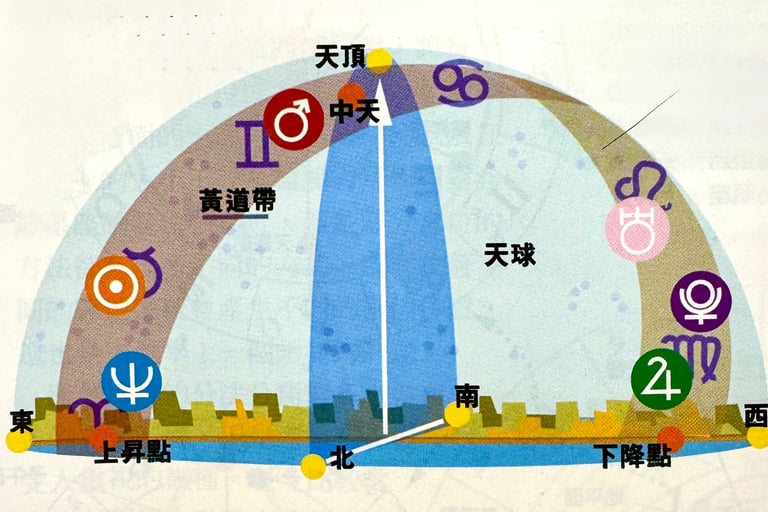
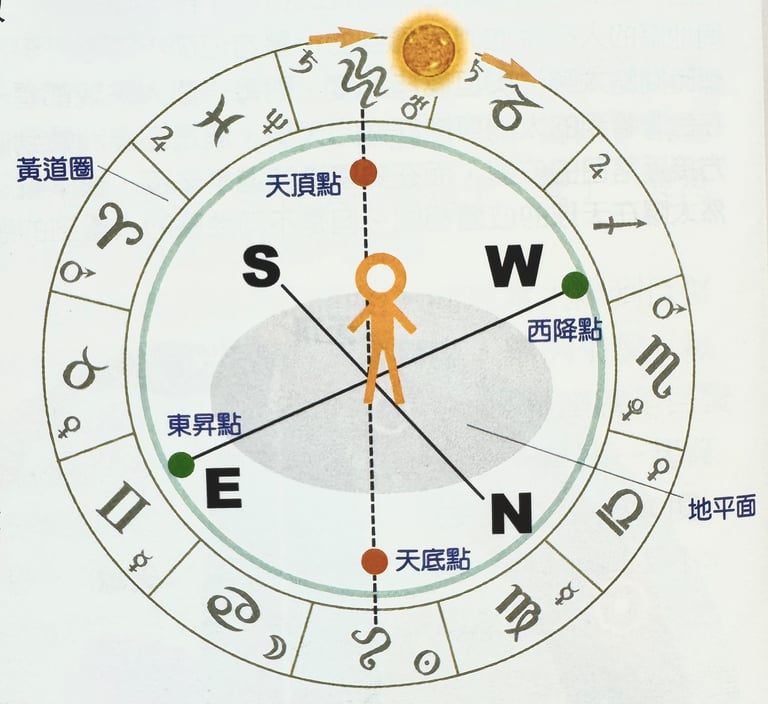
宮位由觀者位置決定,關注天體在天空中的相對位置。當個人生於某地時,地平面無限延伸與黃道交會出兩點,稱為東昇和西降。以出生地為中心,將地平面畫出東西南北四方向,延伸正上方與正下方到天球,也形成兩點,南北端合成一個大圈,稱為子午圈。子午圈與黃道圈交會的點即上述的東昇和西降。
你將這兩點稱為天頂點與天底點。
因此當一個嬰兒誕生時地平線及子午圈會切黃道圈於這四個點。這四個點象徵星盤上四個宇宙符號的角 (Angles),我們通稱為四角,代表了我們個人與這世界接觸的四個重點;是人生的最重要點。象徵著我與我們,向內與向外。
東昇點〈ASC,上升星座〉
東方地平線與黃道的交點,也就是命宮的起點;表示自己與世界的接觸。這是實際上存在的個體的身體特徵及命運。
出生時決定四個重點
如圖,個人出生當刻,當地的地平面與黃道交叉於雙子座;西昇與黃道相交於射手座;子午圈上與黃道相交於水瓶座,下與黃道相交於獅子座
這一頁介紹了占星學中的「天頂點」和「天底點」,以及出生時地平線和子午圈和黃道的四個交點,這些被稱為星盤的四角,代表個人和世界接觸的重要位置。其中,東昇點(即上升星座)是東方地平線與黃道的交點,象徵生命的起點,也表示個人的特徵和命運。出生瞬間,地平線和黃道在天空中分別交於不同星座,這四個重點決定了人和外界的聯繫與個性命運的根本。
Astrological Houses 宮位系統
At any given moment, the positions of planets along the ecliptic are the same worldwide. This reflects the symbolic significance of the ecliptic. However, people in different regions perceive the planets' positions in the sky differently. For example, someone in Taiwan might see the Sun directly overhead, while someone in Australia might see it low in the northern sky—or not at all. Although the Sun’s position on the celestial sphere remains constant, the experience of it varies by location.
For observers in the Northern Hemisphere, the ecliptic usually stretches from east to west across the southern part of the sky. All the planets move along this band in sequence. Due to Earth’s rotation, the planets trace a circular path across the celestial sphere, intersecting with the celestial equator at specific points along the eastern ecliptic.
🏛️ Astrological Houses and the Four Angles
The astrological houses are determined by the observer’s location, focusing on the relative positions of celestial bodies in the sky. When a person is born at a specific place, the horizon extends infinitely and intersects the ecliptic at two points—called the Ascendant (rising point) and Descendant (setting point).
Using the birthplace as the center, we can draw the horizon in four cardinal directions: east, west, south, and north. Extending vertically upward and downward from this center to the celestial sphere creates two more points. The north and south ends together form a great circle called the meridian. The points where the meridian intersects the ecliptic are the same Ascendant and Descendant mentioned above.
You may also refer to these two points as the Midheaven (MC) and Imum Coeli (IC)—the zenith and nadir of the sky. Thus, when a baby is born, the horizon and meridian intersect the ecliptic at four key points. These intersections form the four angles of the natal chart, representing the most significant points of contact between the individual and the world. They symbolize the dynamic between self and others, inward and outward expression.
🌅 Ascendant (ASC – Rising Sign) The Ascendant is the point where the eastern horizon meets the ecliptic. It marks the beginning of the first house and represents the individual's interface with the world—their physical traits and destiny.
🧭 The Four Key Points at Birth At the moment of birth, the local horizon and meridian intersect the ecliptic in specific zodiac signs. For example:
Ascendant intersects Gemini
Descendant intersects Sagittarius
Midheaven (MC) intersects Aquarius
Imum Coeli (IC) intersects Leo
These four points define the foundational structure of the natal chart and represent how a person connects with the external world and their inner self. The Ascendant, in particular, symbolizes the beginning of life and reflects the individual's characteristics and fate.